


Healthy vs. Unhealthy Masturbation: Understanding the Neurochemical Divide and the Risk of Sexual Addiction
Being a CSAT, I often encounter the question of whether masturbation is a behaviour to avoid. Let’s be clear – I’m a therapist, not the
Being a CSAT, I often encounter the question of whether masturbation is a behaviour to avoid. Let’s be clear – I’m a therapist, not the

Polyvagal Theory has emerged as a comprehensive framework for understanding the intricate interplay between the autonomic nervous system and our social and emotional experiences. Developed by Dr. Stephen Porges, Polyvagal Theory sheds light on the physiological underpinnings of our responses to stress, safety, and social connection. Polyvagal Theory is a neurobiological theory that proposes the existence of three distinct branches of the vagus nerve, each associated with different adaptive responses to stress and social interactions. The vagus nerve, a key component of the autonomic nervous system, plays a crucial role in regulating various bodily functions, including heart rate, digestion, and respiratory functions.
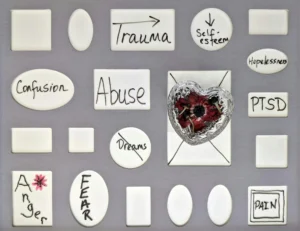
Trauma is a powerful force that can leave enduring imprints on the human psyche. While many are familiar with Post-Traumatic Stress Disorder (PTSD), there is a lesser-known but equally impactful condition known as Complex Post-Traumatic Stress Disorder (CPTSD). CPTSD, is a psychological condition that may develop in individuals who have experienced prolonged and severe trauma, especially in interpersonal relationships. Unlike PTSD, which typically results from a single traumatic incident, CPTSD is associated with chronic exposure to traumatic events, often involving abuse, neglect, discrimination, or repeated instances of interpersonal violence.

When this trust is shattered through acts of betrayal, it can give rise to profound emotional distress and trauma. Betrayal trauma refers to the emotional

Embarking on the path to recovery from sex addiction is a courageous and transformative journey. A pivotal aspect of this process is the disclosure –

Codependency is a relational pattern where individuals excessively engage in self-sacrifice for validation, approval, attachment, worth, and a sense of identity. This term originally emerged in the context of addiction by Melodie Beatty, describing the enabling and dependent behaviors observed in relationships with individuals struggling with substance abuse. Over time, its definition has broadened to encompass a range of unhealthy relationship dynamics.

Recovery coaching is a supportive and collaborative process designed to assist individuals in achieving and maintaining their recovery goals. Recovery coaches work with people who are navigating the challenges of addiction recovery. Unlike therapists or counselors, recovery coaches do not provide clinical treatment; instead, they offer guidance, encouragement, advice, and practical support to individuals in recovery. The work of a recovery coach can include:

Eye Movement Desensitization and Reprocessing (EMDR) is a therapeutic technique that has gained prominence for its effectiveness in treating trauma and other mental health issues. EMDR is a therapeutic approach developed by Francine Shapiro in the late 1980s. Initially designed to address post-traumatic stress disorder (PTSD), EMDR has since been utilized for various mental health conditions, including anxiety, depression, and phobias. EMDR incorporates bilateral stimulation, typically achieved through guided eye movements, tapping, or auditory stimuli. This bilateral stimulation is believed to facilitate the processing of traumatic memories. EMDR also follows an 8-phase protocol that guides the therapist and client through the treatment process. These phases include history-taking, treatment planning, preparation, assessment, desensitization, installation, body scan, and closure.

Internal Family Systems Therapy (IFS) is a distinctive model that delves into the complexities of the inner self, examining the different parts that make up our internal world. In this blog post, we will explore what Internal Family Systems Therapy is, its key principles, and how it can foster self-discovery and healing. Internal Family Systems Therapy, developed by Dr. Richard Schwartz in the 1980s, is a therapeutic approach rooted in the idea that the mind is composed of various subpersonalities or “parts.” These parts, each with its own beliefs, emotions, and intentions, collectively form the internal system of an individual. The goal of IFS is to help individuals navigate and harmonize the relationships among these internal parts, fostering greater self-awareness and emotional well-being.